 Tendon/ligament repair protocols
Description
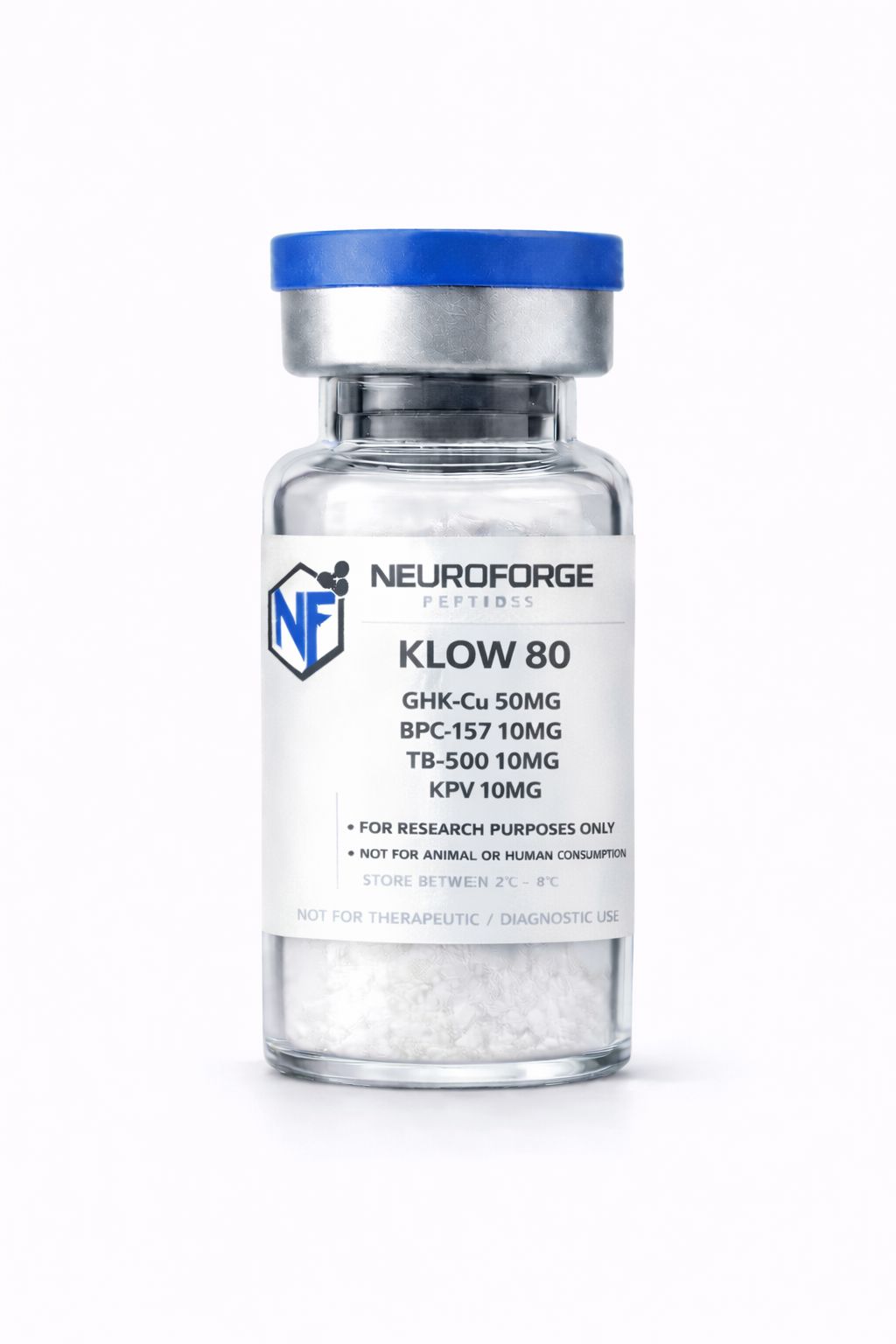
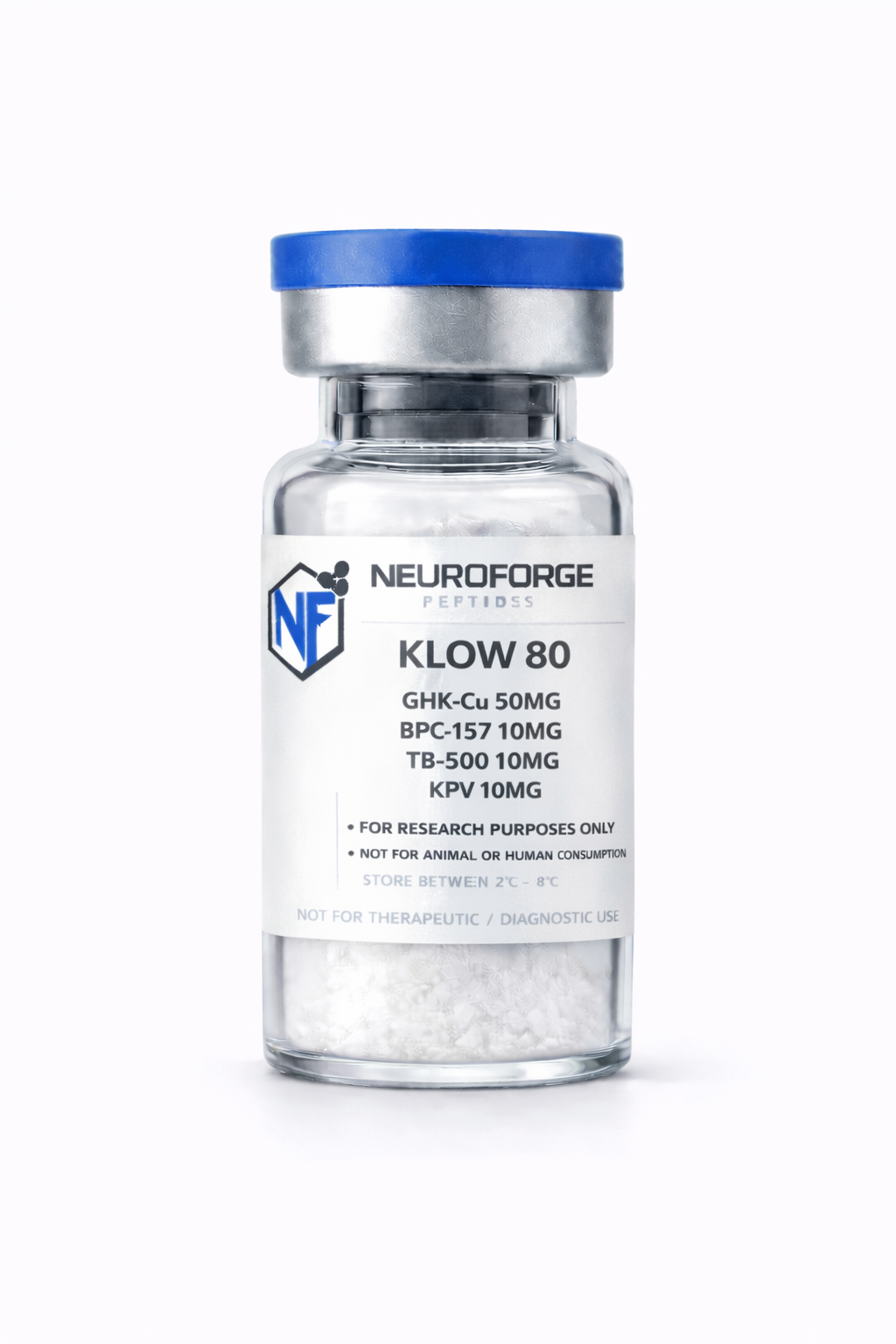
KLOW Research Stack: Comprehensive Healing & Regenerative Research Protocol — NeuroForge Peptides
Advanced Peptide Synergy for Cutting-Edge Tissue Repair & Anti-Inflammatory Research
The KLOW Research Stack includes:
-
TB-500 — 10 mg
-
BPC-157 — 10 mg
-
GHK-Cu — 50 mg
-
KPV — 10 mg
Overview
Welcome to the forefront of regenerative science research with the KLOW Research Stack from NeuroForge Peptides. This meticulously curated combination brings together four extensively studied peptides—BPC-157, TB500, GHK-Cu, and KPV—into a comprehensive research system.
Designed exclusively for in vitro and preclinical laboratory investigation, the KLOW Stack enables advanced study of:
-
Tissue repair signaling
-
Inflammatory modulation
-
Systemic recovery pathways
-
Dermal regeneration mechanisms
Important Disclaimer
The KLOW Research Stack and all components are sold strictly for laboratory research use in controlled environments. These materials are NOT intended for human or veterinary consumption, diagnosis, or treatment.
By purchasing from NeuroForge Peptides, you confirm that you are a qualified researcher operating in compliance with all applicable laws, regulations, and institutional guidelines.
Research Focus Areas
The KLOW Research Stack is engineered for investigators studying:
Comprehensive Tissue Repair
Tendon, ligament, muscle, nerve, and gastric tissue pathways.
Anti-Inflammatory & Anti-Fibrotic Signaling
Systemic and localized inflammatory modulation.
Skin Regeneration & Wound Healing
Collagen synthesis, antioxidant protection, and wound closure dynamics.
Gut–Brain Axis & Immune Modulation
Interactions between gut integrity, systemic inflammation, and immune signaling.
Quality Assurance
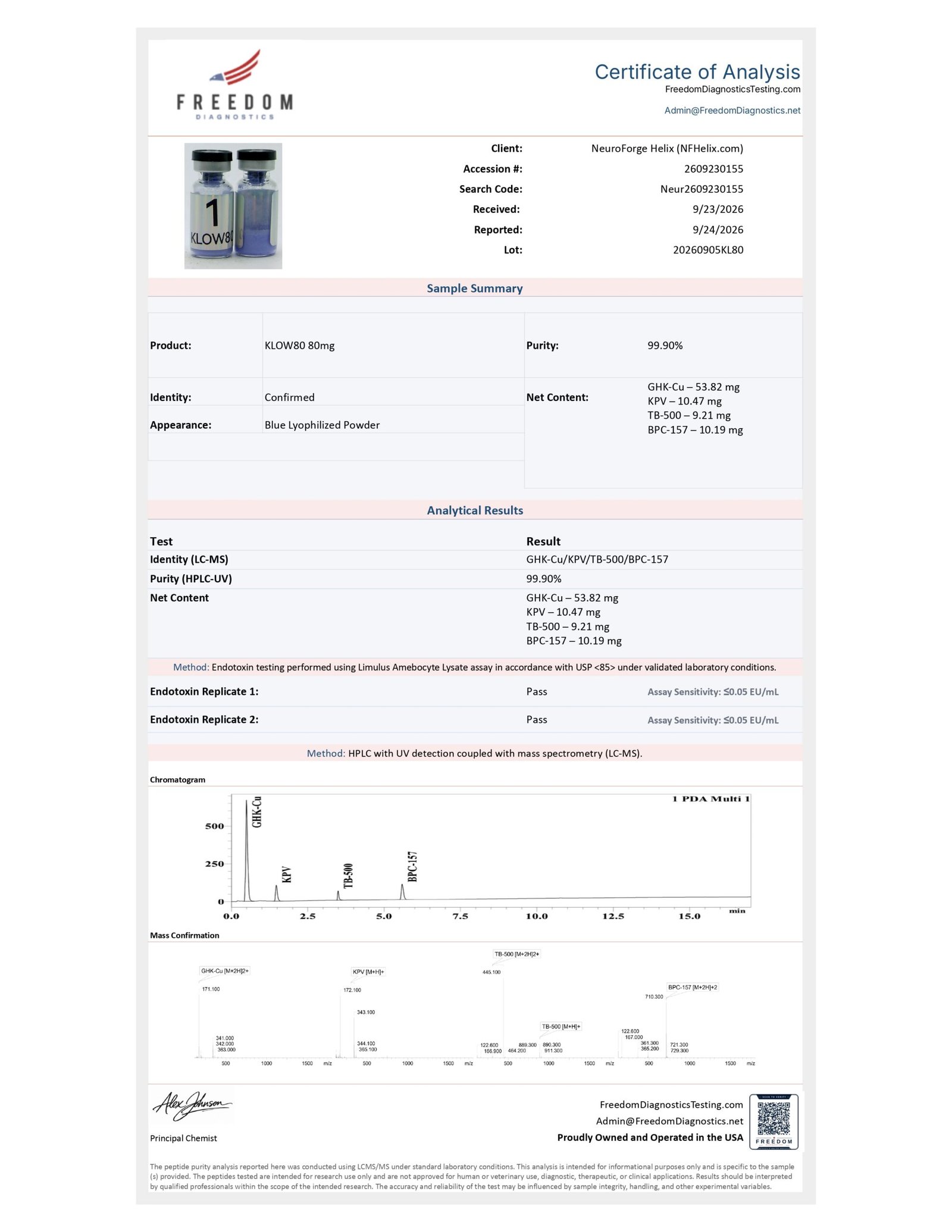
Each vial is produced in an ISO-compliant facility and undergoes rigorous HPLC verification (≥98% purity) to support reproducibility and research reliability.
Component Breakdown
1. BPC-157 — Cytoprotective Repair Peptide
Mechanism of Action
BPC-157 is a stable gastric pentadecapeptide studied for broad cytoprotective activity.
Research indicates involvement in:
-
Angiogenesis and microvascular support
-
Growth factor signaling (VEGF, FGF)
-
Fibroblast migration and collagen organization
-
Inflammatory pathway modulation
-
Oxidative stress protection
Key Research Areas
-
Tendon and ligament repair models
-
Gastrointestinal protection studies
-
Muscle injury research
-
Neuroprotective investigations
Typical research ranges
-
In vitro: 0.1–1 nM
-
Systemic preclinical: 1–10 µg/kg
-
Local models: 50–200 µg per site
2. TB500 (Thymosin Beta-4) — Migration & Anti-Fibrotic Peptide
Mechanism of Action
TB500 is a synthetic analog of Thymosin Beta-4 involved in cellular movement and tissue remodeling.
Primary research mechanisms include:
-
Enhanced cell migration
-
Angiogenic signaling
-
Anti-fibrotic activity
-
Cytokine modulation
-
Actin regulation
Key Research Areas
-
Cardiac repair models
-
Skeletal muscle injury
-
Corneal and dermal wound studies
-
Post-surgical adhesion research
Typical research ranges
-
Acute models: 2–6 mg/kg, 2–3× weekly
-
Chronic models: 1–2 mg/kg, 2–3× weekly
3. GHK-Cu — Dermal & Collagen Signaling Peptide
Mechanism of Action
GHK-Cu is a naturally occurring copper-binding tripeptide involved in tissue remodeling pathways.
Research suggests activity in:
-
Collagen and elastin production
-
Extracellular matrix remodeling
-
Antioxidant signaling
-
Stem/immune cell recruitment
-
Gene expression modulation
Key Research Areas
-
Skin rejuvenation models
-
Photoaging studies
-
Wound healing research
-
Hair follicle investigations
Typical research ranges
-
Topical studies: 0.1%–1%
-
Systemic models: 0.5–2 mg/kg
4. KPV — Targeted Anti-Inflammatory Peptide
Mechanism of Action
KPV is a C-terminal fragment of α-MSH that retains potent anti-inflammatory signaling.
Primary research effects include:
-
NF-κB pathway inhibition
-
Cytokine suppression (TNF-α, IL-6, IL-1β)
-
Gut inflammatory modulation
-
Topical and systemic activity
Key Research Areas
-
IBD and colitis models
-
Dermal inflammation
-
Autoimmune pathway research
-
Systemic inflammatory response studies
Typical research ranges
-
GI models: 50–200 µg daily
-
Topical studies: 0.01%–0.1%
Synergistic Research Value of the KLOW Stack
The strength of the KLOW Research Stack lies in its complementary multi-phase design:
-
BPC-157 + TB500: Drive angiogenesis and cellular migration
-
KPV: Helps modulate inflammatory signaling environment
-
GHK-Cu: Supports collagen remodeling and tissue quality
This layered approach allows researchers to evaluate healing cascades from initiation → proliferation → remodeling within a single experimental framework.
Why Choose NeuroForge Peptides
✔ ≥98% HPLC-verified purity
✔ Research-focused formulations
✔ ISO-compliant manufacturing
✔ Fast, discreet U.S. shipping
✔ Bulk pricing available for large research programs
Final Notice
These materials are for laboratory research purposes only. They are not drugs, food additives, or intended for human or veterinary use.
The information provided is for scientific and educational purposes within the research community and does not constitute medical advice.
Reviews
There are no reviews yet.