Description
GHK-Cu Copper Peptide Overview
GHK-Cu is a naturally occurring copper-binding tripeptide composed of glycyl-L-histidyl-L-lysine. This complex is present in human plasma, saliva, and urine and has been widely studied for its role in tissue remodeling and cellular repair processes. Research suggests GHK-Cu supports regenerative activity by attracting key repair cells to damaged tissue, helping promote structured recovery.
Skin Regeneration and Appearance Support
Supports Collagen Activity
GHK-Cu has been studied for its interaction with pathways involved in inflammation and oxidative stress. Research indicates it may stimulate collagen production, an essential structural protein in skin. This activity is associated with improvements in skin texture, elasticity, and overall firmness, which is why the peptide is frequently explored in advanced skin research.
Helps Address Photoaging
Published research suggests GHK-Cu may help counteract visible effects associated with UV exposure, including fine lines and surface irregularities. Its regenerative signaling activity has been linked to smoother-appearing, more resilient skin in laboratory models.
Encourages Microvascular Development
Adequate blood flow is critical for tissue maintenance and repair. Studies indicate GHK-Cu may promote angiogenic signaling, supporting the formation of small blood vessels that help deliver nutrients to compromised tissue areas.
Antimicrobial and Tissue Repair Properties
Demonstrates Antimicrobial Potential
When complexed with certain fatty acids, GHK-Cu has shown antimicrobial activity against select bacteria and fungi in laboratory settings. This property is being explored for its potential role in maintaining a clean wound environment.
Supports Wound Healing Processes
Clinical and preclinical research has associated GHK-Cu with enhanced healing dynamics in difficult wound models, including diabetic ulcers and circulation-compromised tissue. Findings suggest the peptide may support organized tissue repair and recovery pathways.
Pain Modulation Research
L-Lysine Pathway Activity
Animal research indicates GHK-Cu may influence levels of L-lysine, an amino acid associated with natural pain modulation pathways.
Nitric Oxide Support via L-Arginine
Studies also suggest the peptide may elevate L-arginine activity, which plays a role in nitric oxide production and vascular function—mechanisms being explored in discomfort and recovery research.
Neuroprotective Research Interest
GHK-Cu is present in nervous system tissue, where it has been studied for potential protective signaling roles. Age-related decline in endogenous levels has prompted research into its involvement in neural maintenance. Preclinical findings suggest the peptide may support nerve growth signaling, modulate inflammatory pathways, and influence gene expression patterns associated with neurodegenerative processes. Ongoing research continues to evaluate these mechanisms.
Product Specifications
-
CAS Number: 89030-95-5
-
Molecular Formula: C₁₄H₂₂CuN₆O₄
-
Sequence: (GLY-HIS-LYS)-Cu-HAc
-
Molar Mass: 340.38 g/mol
-
Class: Tripeptide
-
Form: Lyophilized powder in sterile glass vial
-
Purity: ≥98%
-
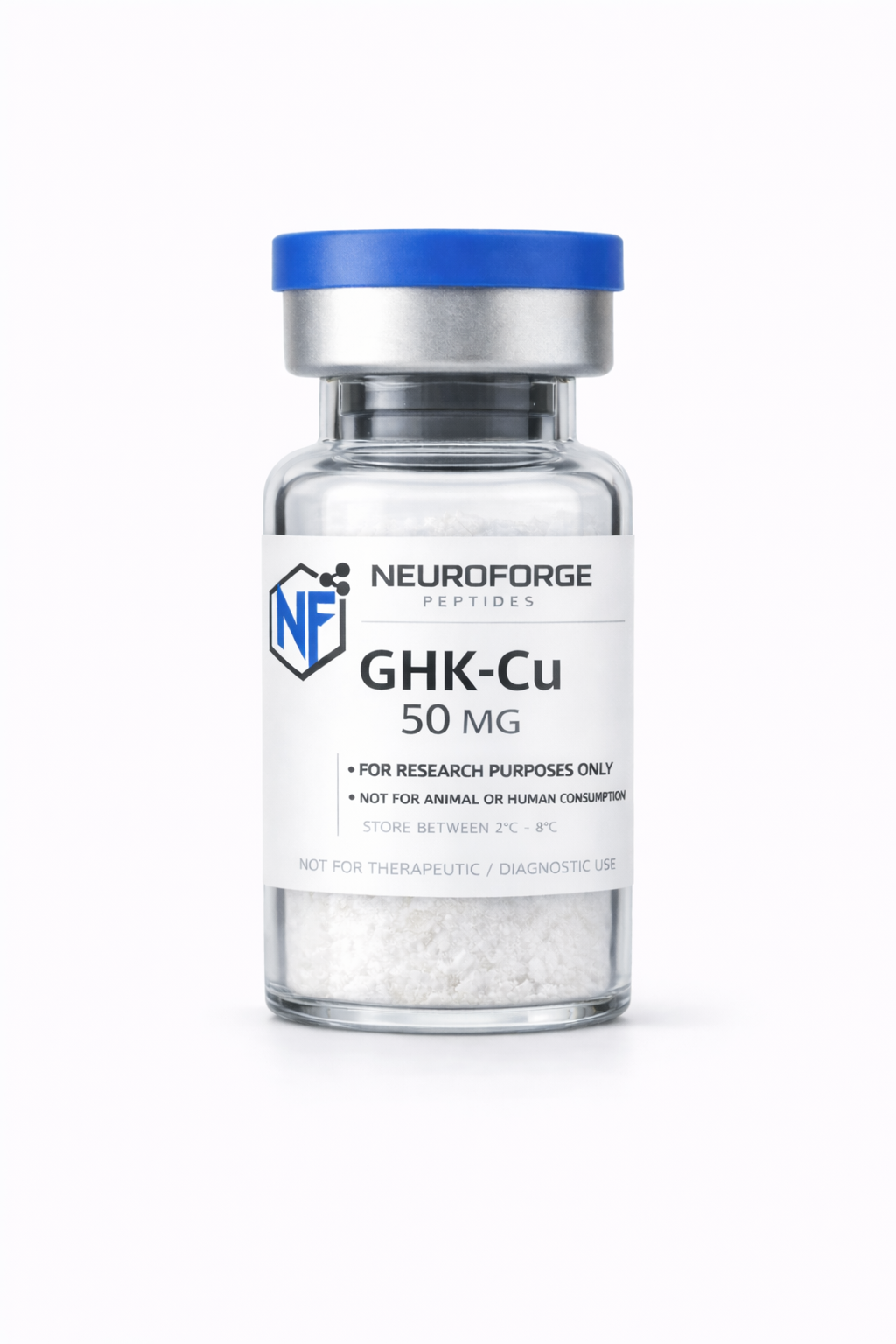
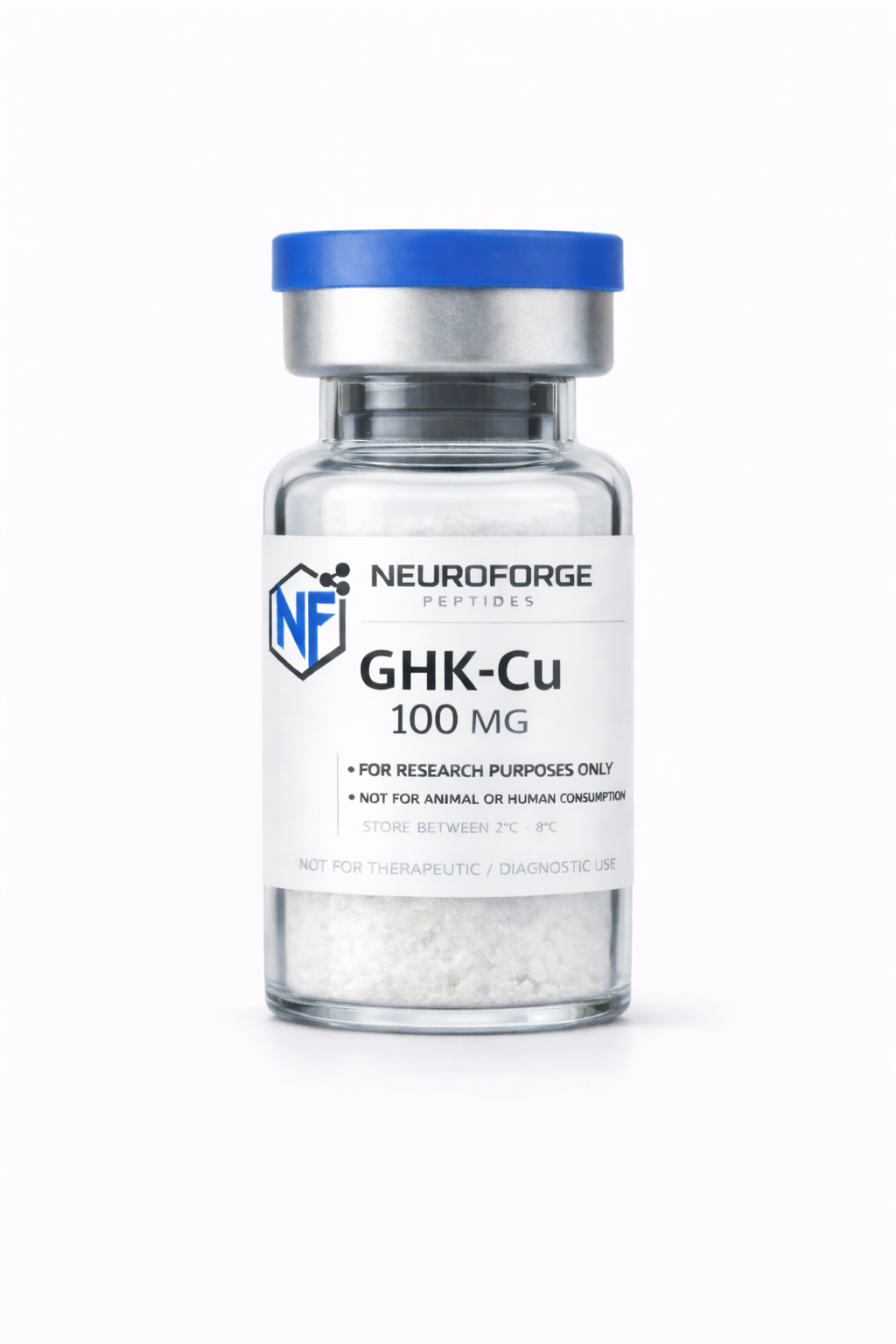
Quantity: 50 mg per vial
-
Color: Purple (copper complex)
-
Storage: Refrigerate after reconstitution
Important Notice
This material is intended strictly for in vitro laboratory research use by qualified professionals. It is not approved by the FDA for human or animal use and must not be marketed, labeled, or used as a drug, food, dietary supplement, or cosmetic.
Selected References
-
Taylor & Francis — Anti-aging skin care formulations
-
Hindawi — GHK peptide as a natural modulator of skin regeneration pathways
-
MDPI — Regenerative and protective actions of GHK-Cu
-
Taylor & Francis — The human tripeptide GHK and tissue remodeling
-
PubMed — The potential of GHK as an anti-aging peptide
-
Springer — Copper tripeptides
-
Wiley Online Library — GHK-Cu liposomes and wound healing
-
Frontiers — Innovation in chronic airway diseases
-
Portland Press — Copper (II) interaction with GHK
-
Hindawi — GHK-Cu in oxidative stress research
Reviews
There are no reviews yet.