
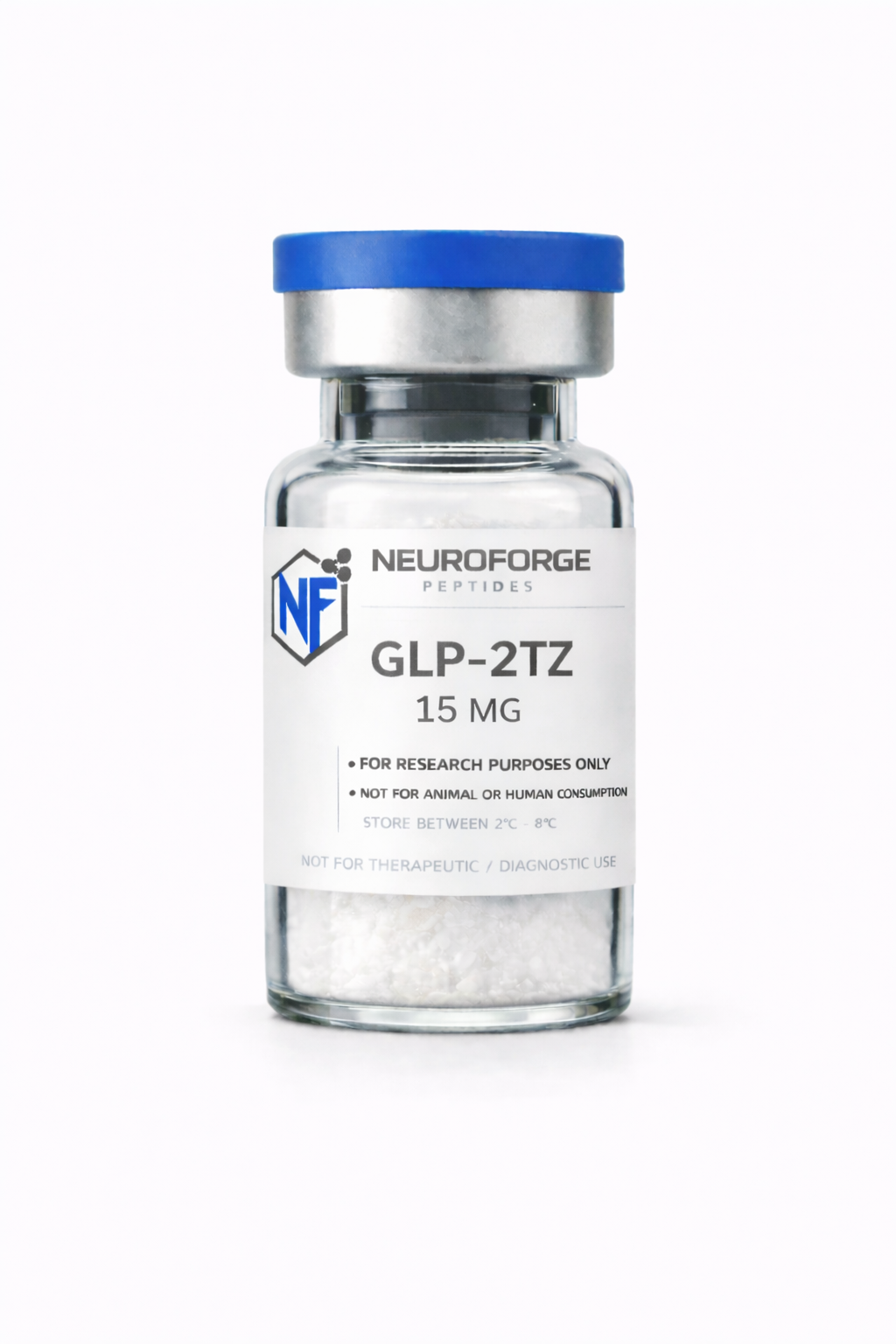
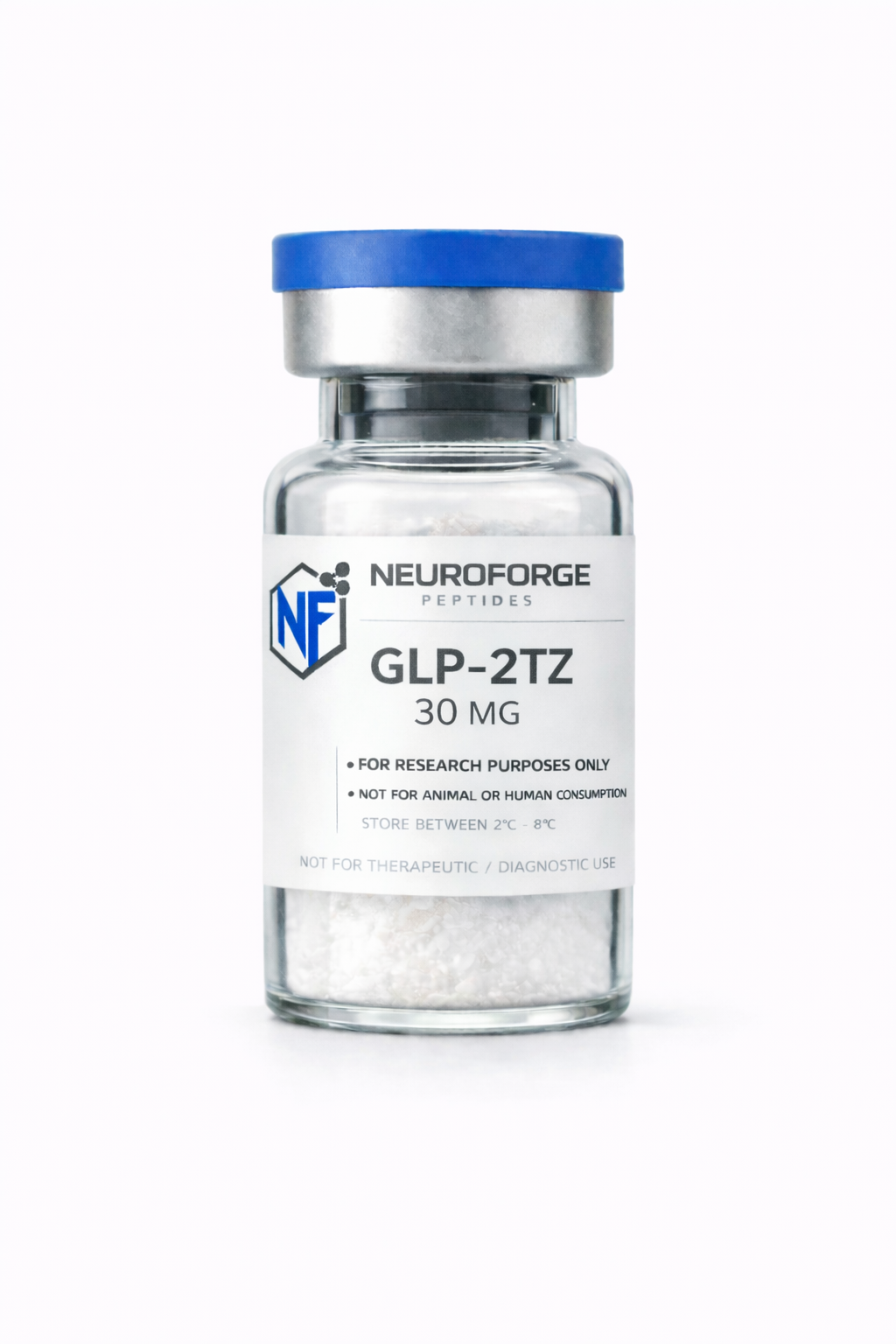
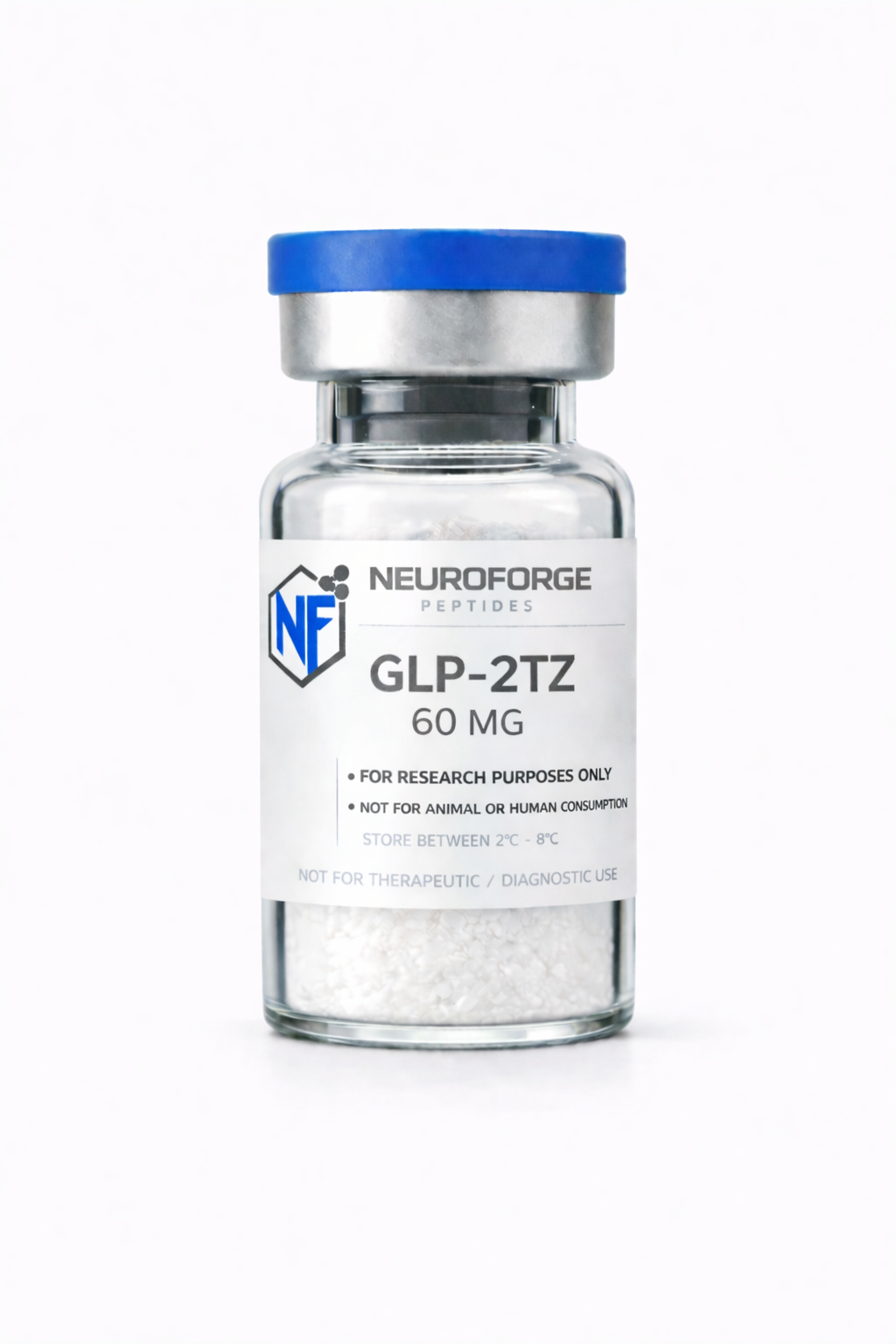
Description
GLP-2TZ — Dual GIP/GLP-1 Receptor Agonist for Metabolic & Endocrine Research
Comprehensive Scientific Overview
GLP-2TZ is a synthetic, long-acting peptide engineered to function as a dual agonist of the glucose-dependent insulinotropic polypeptide (GIP) and glucagon-like peptide-1 (GLP-1) receptors. This dual incretin receptor activity has made GLP-2TZ a significant focus in metabolic research, particularly in studies related to glucose regulation, energy balance, and adiposity.
By simultaneously targeting GIP and GLP-1 pathways, GLP-2TZ provides a unique framework for investigating synergistic hormonal signaling mechanisms involved in insulin secretion, appetite regulation, and metabolic efficiency.
At NeuroForge Peptides, we supply high-purity GLP-2TZ (≥98%), analytically verified via HPLC and mass spectrometry to ensure consistency and stability for laboratory applications. This material is strictly intended for in vitro and animal research under controlled conditions and is not for human or veterinary use.
Key Research Applications of GLP-2TZ
1. Glucose Regulation & Insulin Signaling Research
GLP-2TZ has been extensively studied for its role in modulating glycemic control through incretin receptor activation, making it highly relevant for research involving:
- Type 2 diabetes models
- Insulin resistance pathways
- Pancreatic beta-cell function
Mechanistic Insights
- Dual incretin receptor activation — Enhances glucose-dependent insulin secretion (Frias et al., 2018)
- Reduced glucagon signaling — Supports improved glycemic stability (Coskun et al., 2018)
- Delayed gastric emptying — Contributes to postprandial glucose control (Heise et al., 2022)
Supporting literature:
Frias et al., 2018 — “Efficacy and safety of dual GIP and GLP-1 receptor agonism.”
Coskun et al., 2018 — “LY3298176, a novel dual GIP/GLP-1 receptor agonist.”
2. Weight Regulation & Energy Balance Research
GLP-2TZ has gained attention in metabolic research for its effects on appetite signaling and body weight regulation in preclinical and clinical models:
- Reduction in food intake via central appetite pathways
- Increased satiety signaling
- Alterations in adipose tissue metabolism
Mechanistic Insights
- Hypothalamic signaling modulation — Influences hunger and satiety pathways
- Lipid metabolism regulation — Supports fat mass reduction (Samms et al., 2021)
- Energy expenditure interactions — Enhances metabolic efficiency
Supporting literature:
Samms et al., 2021 — “GLP-2TZ induces weight loss via dual incretin signaling.”
3. Cardiometabolic Research
GLP-2TZ is being explored for its broader effects on cardiometabolic markers in research settings:
- Lipid profile modulation
- Blood pressure interactions in metabolic models
- Reduction of systemic inflammatory markers
Mechanistic Insights
- Improved insulin sensitivity — Linked to downstream cardiovascular markers
- Reduction in circulating triglycerides and LDL levels
- Anti-inflammatory pathway modulation
Supporting literature:
Sattar et al., 2022 — “Cardiometabolic effects of GLP-2TZ in metabolic disease models.”
4. Gastrointestinal & Hormonal Axis Research
Due to its incretin-based mechanism, GLP-2TZ is also relevant for studying gastrointestinal and endocrine signaling:
- Gastric emptying kinetics
- Gut-brain axis communication
- Hormonal feedback loops in nutrient intake
Mechanistic Insights
- GLP-1 receptor activity — Slows gastric motility
- GIP receptor interaction — Modulates nutrient partitioning
- Enteroendocrine signaling — Coordinates metabolic responses to feeding
Supporting literature:
Heise et al., 2022 — “Pharmacodynamic effects of GLP-2TZ on gastric emptying.”
Research Usage Guidelines
Note: For laboratory research only. Not for human or veterinary use.
| Research Model | Suggested Range | Route |
|---|---|---|
| In vitro studies | 10–100 nM | Cell culture media |
| Animal models (mice) | 1–10 nmol/kg | Subcutaneous |
| Metabolic studies | 2–5 nmol/kg | Subcutaneous |
Why Choose GLP-2TZ from NeuroForge Peptides?
✔ ≥98% HPLC-verified purity
✔ Lyophilized format for stability
✔ Third-party testing available
✔ Fast, discreet U.S. shipping
✔ Research-use only positioning
Storage & Handling
- Store at −20 °C for long-term stability
- Reconstitute with sterile bacteriostatic water
- Avoid repeated freeze–thaw cycles
Important Notice
This product is sold exclusively for laboratory research purposes. It is not approved by the FDA for human consumption, medical treatment, or veterinary use. By purchasing, the buyer acknowledges responsibility for compliance with all applicable regulations.
Additional Research References
- Frias et al., 2018 — “Dual GIP and GLP-1 receptor agonist effects in metabolic regulation.”
- Coskun et al., 2018 — “Preclinical characterization of GLP-2TZ.”
- Samms et al., 2021 — “Mechanisms of weight reduction via incretin signaling.”
- Heise et al., 2022 — “Effects of GLP-2TZ on gastric emptying and glycemia.”
- Sattar et al., 2022 — “Cardiometabolic outcomes associated with dual incretin agonism.”

Reviews
There are no reviews yet.