
Description
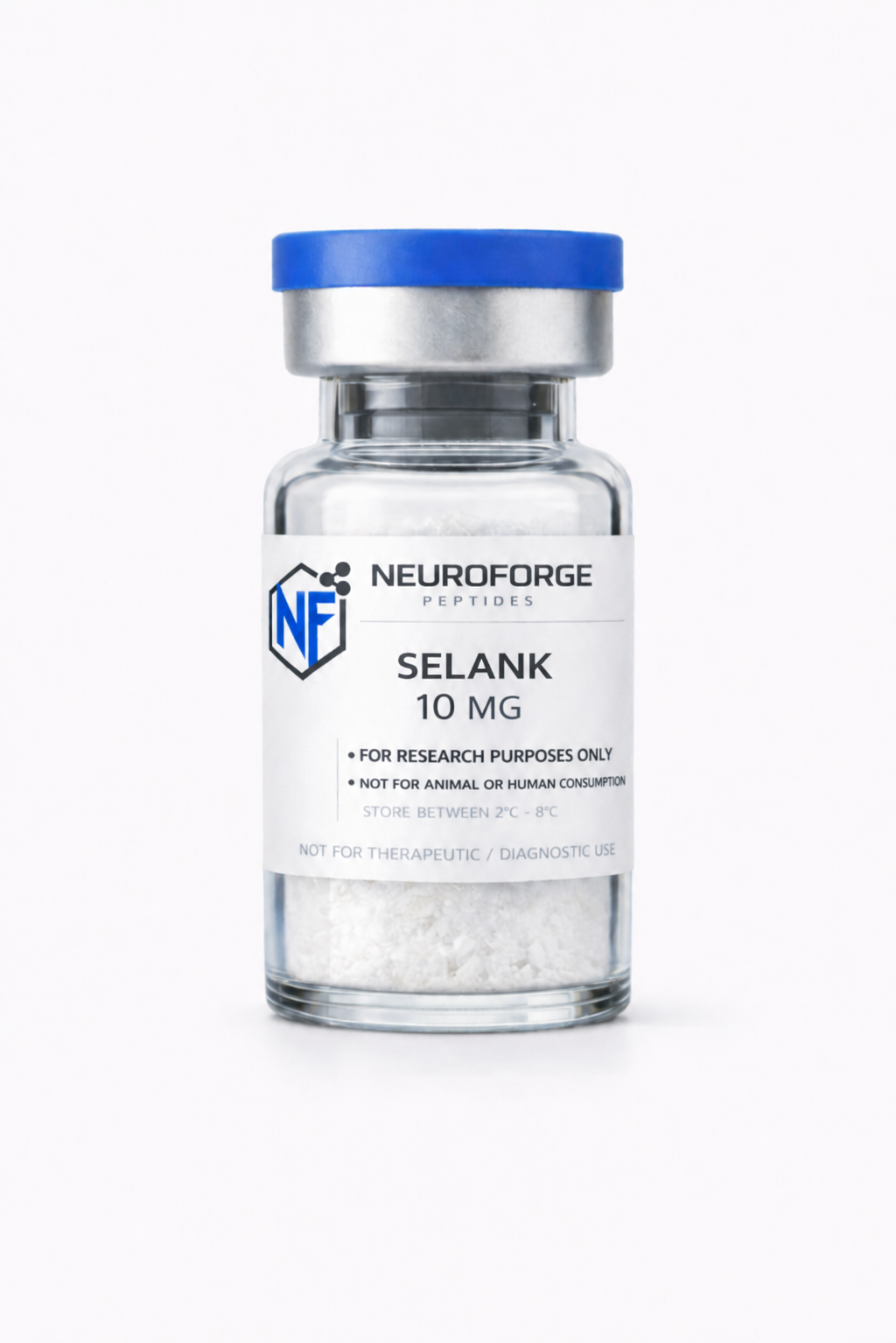
Selank 10MG (Lyophilized Peptide) – For Research Purposes Only
Product details:
- Catalog #: SEL-10MG
- Form: Lyophilized (freeze-dried) powder
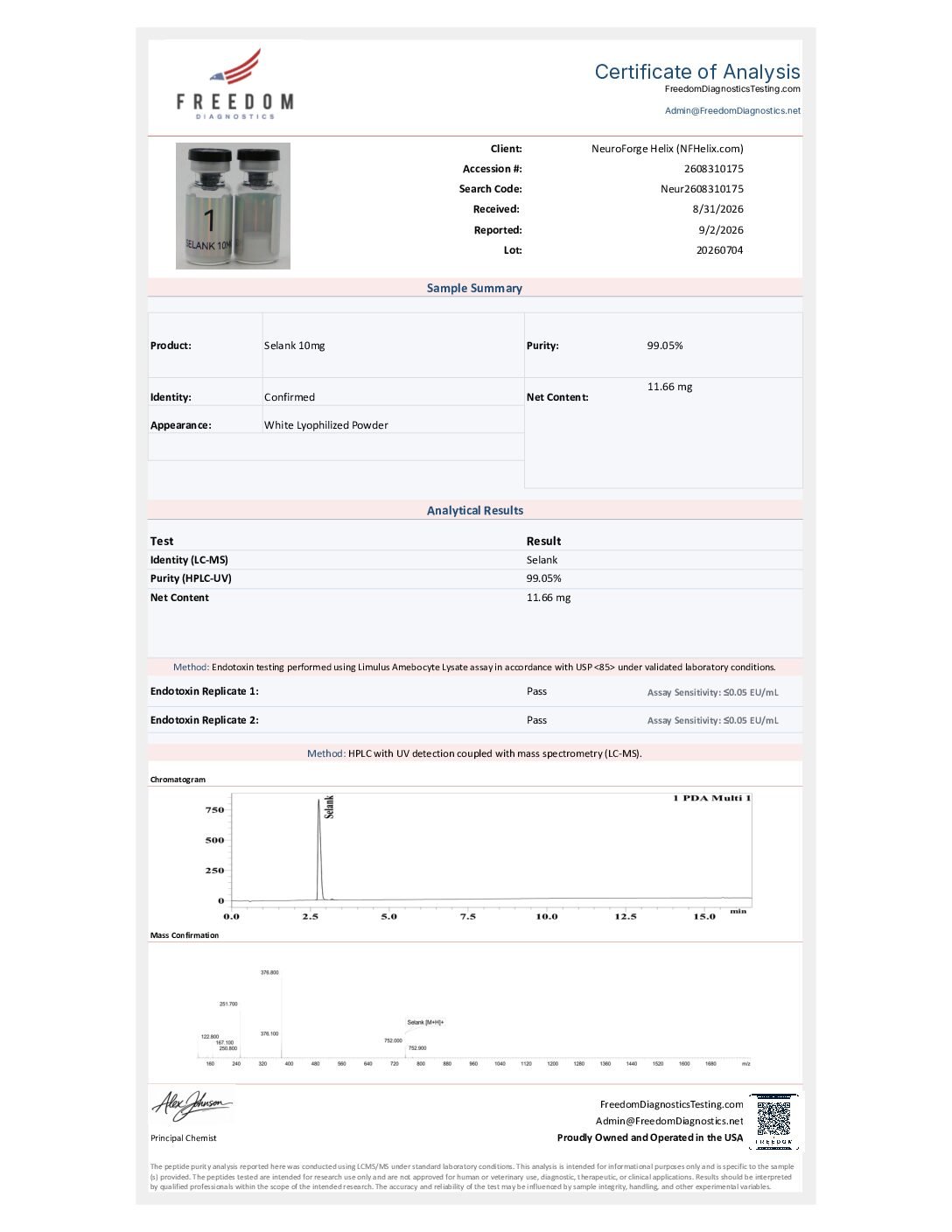
- Purity: ≥99% (HPLC verified)
- Quantity: 10mg per vial
- Storage: Before reconstitution: -20°C / After reconstitution: 2-8°C
- Shipping: Ambient temperature with ice pack (temperature-sensitive)
Key research applications:
- Anxiolytic-like activity studies without sedative effects
- Cognitive enhancement and memory retention research
- Neurotransmitter modulation (serotonin, dopamine, norepinephrine)
- Neuroinflammatory and cytokine regulation
- Immunotropic mechanism investigations
Handling:
- Reconstitute with sterile bacteriostatic water. Gently swirl – do not vortex. Aliquot to avoid freeze-thaw cycles.
 Important:
- This product is supplied for in vitro and animal research exclusively. Not for diagnostic, therapeutic, or human use. Must be handled by qualified personnel with appropriate PPE.
Overview
Selank is a synthetic heptapeptide (Thr-Lys-Pro-Arg-Pro-Gly-Pro) structurally related to the endogenous immunomodulatory peptide tuftsin. Originally developed at the Institute of Molecular Genetics of the Russian Academy of Sciences, Selank has been the subject of numerous preclinical and clinical investigations exploring its effects on anxiety-like behavior, cognitive function, neuroinflammation, and neurotransmitter modulation.
This 10mg lyophilized preparation is intended exclusively for in vitro and in vivo research applications, including cellular assays, receptor binding studies, animal model investigations, and analytical method development. This product is not intended for human or veterinary use outside of regulated laboratory settings.
Chemical & Physical Properties
- Molecular Formula: C₃₃H₅₇N₁₁O₉
- Molecular Weight: 751.87 g/mol
- Sequence: H-Thr-Lys-Pro-Arg-Pro-Gly-Pro-OH (or acetate salt variant depending on batch)
- Appearance: White to off-white lyophilized cake or powder
- Solubility: Soluble in sterile water for injection (0.9% NaCl recommended), PBS (pH 5–6), or bacteriostatic water. Avoid vigorous shaking.
- Stability: Stable when stored as directed. Avoid repeated freeze-thaw cycles after reconstitution.
Primary Research Applications
Investigators have utilized Selank in controlled laboratory studies to examine the following mechanisms and effects:
1. Anxiolytic-Like Activity Without Sedation
Unlike classical benzodiazepines, Selank does not appear to produce muscle relaxation, motor coordination deficits, or amnestic effects in preclinical models. Researchers have observed dose-dependent reductions in elevated plus-maze and open field test anxiety indicators, suggesting potential modulation of the GABAergic system—though via a distinct, non-benzodiazepine pathway.
2. Cognitive Enhancement & Nootropic Potential
Studies have reported improvements in learning acquisition and memory retention in rodent models of scopolamine-induced amnesia and stress-impaired cognition. Selank appears to influence brain-derived neurotrophic factor (BDNF) expression and may support hippocampal neurogenesis under stress conditions.
3. Neuroinflammatory Modulation
Selank exhibits immunotropic properties linked to its tuftsin backbone. Research indicates it may downregulate pro-inflammatory cytokines (IL-1β, IL-6, TNF-α) and upregulate anti-inflammatory IL-10 in central nervous system tissues. This has drawn interest in models of chronic stress, traumatic brain injury, and neuropathic pain.
4. Neurotransmitter Regulation
Investigations using microdialysis and tissue homogenates have demonstrated that Selank may alter extracellular levels of serotonin (5-HT), dopamine (DA), and norepinephrine (NE) in the prefrontal cortex and hippocampus. These changes are region-specific and dose-dependent, offering a research avenue for understanding its mechanism of action.
5. Viral & Immune Research (In Vitro)
Due to its tuftsin homology, Selank has been evaluated for its ability to modulate interferon-gamma (IFN-γ) and other antiviral signaling molecules in cultured immune cells. This application remains exploratory but is documented in peer-reviewed immunology literature.
Quality Assurance & Testing
Each batch of Selank 10mg undergoes rigorous quality control prior to release:
- HPLC Purity: ≥99% (chromatogram available upon request)
- Mass Spectrometry (MS): Confirmed molecular weight within ±0.05% of theoretical
- Residual Solvent Analysis: Meets ICH Q3C guidelines
- Endotoxin Testing: <1.0 EU/mg (LAL assay)
- Sterility: 0.22µm filtered prior to lyophilization
A Certificate of Analysis (CoA) is provided with each shipment.
Reconstitution & Handling Protocol (For Laboratory Use Only)
- Allow the sealed vial to reach room temperature before opening to avoid condensation.
- Add 1–2 mL of sterile bacteriostatic water or 0.9% sterile saline to the lyophilized powder.
- Swirl gently – do not vortex or shake vigorously, as peptides can denature.
- Allow to dissolve fully (typically 1–3 minutes). Solution should be clear and particle-free.
- Aliquot to avoid freeze-thaw cycles and store at 2–8°C for up to 30 days. For longer storage, freeze at -20°C in single-use aliquots.
Typical Research Dosing (Animal Models):
0.1 – 1.0 mg/kg via intraperitoneal (IP) or subcutaneous (SC) injection, depending on species and study design. Route and dose must be determined by the principal investigator.
Safety & Legal Disclaimer
FOR RESEARCH PURPOSES ONLY. NOT FOR HUMAN OR VETERINARY USE.
- This product is not a drug, medicine, dietary supplement, or food additive.
- Not for diagnostic, therapeutic, or recreational use.
- Not approved by the FDA, EMA, MHRA, or any other regulatory agency for human consumption.
- Use only by qualified researchers in appropriately equipped laboratories.
- Do not administer to humans or companion animals under any circumstances.
- Must be handled with appropriate personal protective equipment (PPE) including gloves, lab coat, and eye protection.
By purchasing this product, you affirm that you are at least 18 years of age and that you will use Selank 10mg exclusively for lawful research purposes.
References (Selected Peer-Reviewed Literature)
- Volkova, A. V., et al. (2016). Neuroscience and Behavioral Physiology, 46(3), 273–278.
- Kolik, L. G., et al. (2014). Bulletin of Experimental Biology and Medicine, 157(3), 351–354.
- Zozulya, A. A., et al. (2008). Bulletin of Experimental Biology and Medicine, 145(3), 340–343.
- Uchakina, O. N., et al. (2014). Pharmaceutical Chemistry Journal, 48(1), 10–13.
Full reference list available upon request.
Add to cart for research use only.
By adding this product to your cart, you confirm that you have read, understood, and agree to the terms above.
Reviews
There are no reviews yet.